


 English
 Arabic
 Chinese (Simplified)
 Chinese (Traditional)
 Portuguese
 Russian
 Spanish
Early Intervention Services in Pennsylvania
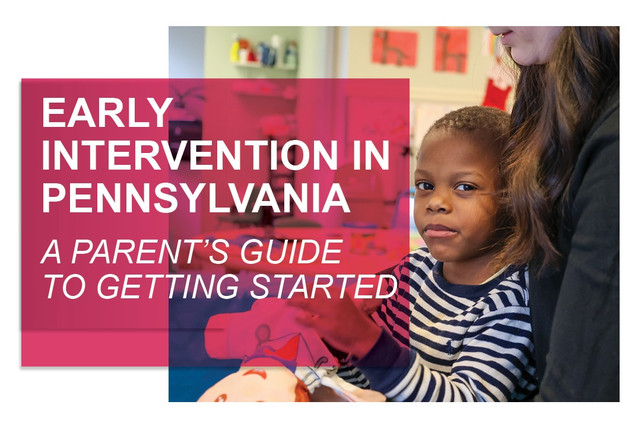
Parent’s Guide to Getting Started
If you’re concerned about your child’s development, you are not alone. Early Intervention Services in Pennsylvania (EI) provides state-supported services for infants, toddlers, and preschool-aged children (birth through age five) who may have developmental delays or disabilities.
This guide explains how EI services work, what to expect during the evaluation process, and how to begin the EI intake process for your child.
For a brief overview, watch our companion video: A Brief Introduction to Early Intervention in Pennsylvania.
What Is Early Intervention (EI) in Pennsylvania?
EI is designed to identify and support children with developmental delays as early as possible. Services are tailored to each child and family.
In Philadelphia:
- Birth to age 3: Childlink (under PHMC) coordinates services.
- Ages 3 to school age (age of beginners): Elwyn Early Learning Services (ELS) provides Preschool Early Intervention.
Depending on your child’s age, services are guided by one of two plans:
- IFSP (Individualized Family Service Plan) – For children under age three. The IFSP focuses on family-centered goals and support.
- IEP (Individualized Education Program) – For children ages three to five who qualify for Preschool Early Intervention.
Both the IFSP and IEP are individualized and designed around your child’s specific needs.
What EI Services May Include
Early Intervention services may include:
- Special instruction
- Speech therapy
- Occupational therapy
- Physical therapy
- Behavioral supports
- Family coaching
- Hearing and vision services
Services are provided in natural learning environments whenever possible, including home, preschool, or community settings.
How to Start the EI Intake Process
For Preschool Early Intervention (ages 3–5), the first step is completing an EI intake.
Parents begin by calling Elwyn’s Access to Care Call Center at 215-222-8054 (press 1 for Admissions).
During the intake:
- An Intake Coordinator gathers demographic information.
- You discuss concerns about your child’s development.
- The coordinator explains the Preschool Early Intervention process.
- A multidisciplinary evaluation (MDE) is scheduled.
The EI intake is simply the first step toward understanding whether your child may benefit from services.
What to Expect: Evaluation & IEP Timeline
Once you request an evaluation, here’s what happens:
1. Permission to Evaluate (PTE)
Within 10 calendar days, you will receive a Permission to Evaluate (PTE) form.
You must sign and return it before the evaluation can begin.
2. Evaluation Process
After receiving your signed PTE, Elwyn ELS has 60 calendar days to:
- Complete the multidisciplinary evaluation
- Provide a written report with results and recommendations
The evaluation determines whether your child qualifies for EI services due to developmental delays.
3. IEP Meeting (If Eligible)
If eligible, an Initial IEP meeting will be scheduled within 30 calendar days.
At this meeting:
- You collaborate with the team.
- Goals and services are developed.
- Supports are planned in the Least Restrictive Environment (LRE).
4. NOREP & Starting Services
After the meeting, you will receive:
- The finalized IEP
- A Notice of Recommended Educational Placement (NOREP)
Services begin within 14 calendar days after the signed NOREP is returned.
Why EI Matters
The early years are critical for brain development. Neural connections form rapidly, making young children especially responsive to learning and support.
Research shows that identifying developmental delays early and beginning EI services can significantly improve:
- Communication skills
- Motor development
- Cognitive development
- Social-emotional growth
Early support leads to stronger long-term outcomes.
Signs of Developmental Delays: When Should Parents Reach Out?
Trust your instincts. You may want to begin the EI intake process if your child:
- Is not meeting developmental milestones
- Has lost previously learned skills
- Has limited speech or babbling
- Avoids eye contact
- Has difficulty following directions
- Struggles with movement or coordination
- Shows significant behavioral challenges
- Has feeding difficulties
- Appears significantly behind peers
Even subtle concerns are valid reasons to call.
An Intake Coordinator will explore your concerns in a supportive, non-judgmental way and schedule a multidisciplinary evaluation if appropriate.
Common Misconceptions About EI Services
Myth #1: EI is only for severe disabilities:
Early Intervention Pennsylvania supports a wide range of developmental delays — from mild speech delays to more complex needs.
Myth #2: An IEP permanently labels my child:
Many children receive short-term support and no longer require services once key skills are strengthened.
Myth #3: Services replace the parent’s role:
EI is family-centered. Parents remain the most important teachers in their child’s life. Professionals provide strategies that fit into daily routines.
Reassurance for Families New to EI
Seeking help is a strength.
Many families in Philadelphia and Chester County access EI services each year. The process is collaborative and designed to provide clarity and peace of mind.
Early Intervention does not automatically mean your child will qualify. It simply ensures you receive expert guidance and answers.
If you have concerns, call Elwyn Access to Care: 215-222-8054 (press 1).
Learn More
Explore our Parent Education Video Series, including:
- After the Evaluation: Understanding the IEP & Starting Services
- Preschool Early Intervention in Pennsylvania
- Developmental milestones
- Navigating educational and legal processes
Watch the companion video:
“A Brief Introduction to Early Intervention in Pennsylvania.”
- Allison Leverick, Executive Director, Early Learning Services